Auditing Everyday Basics: What to Check Before You Add a Piece
Before adding another everyday piece, look at fit, fabric and care. This guide gives you a short list to run through, whether you're in a store or at home.
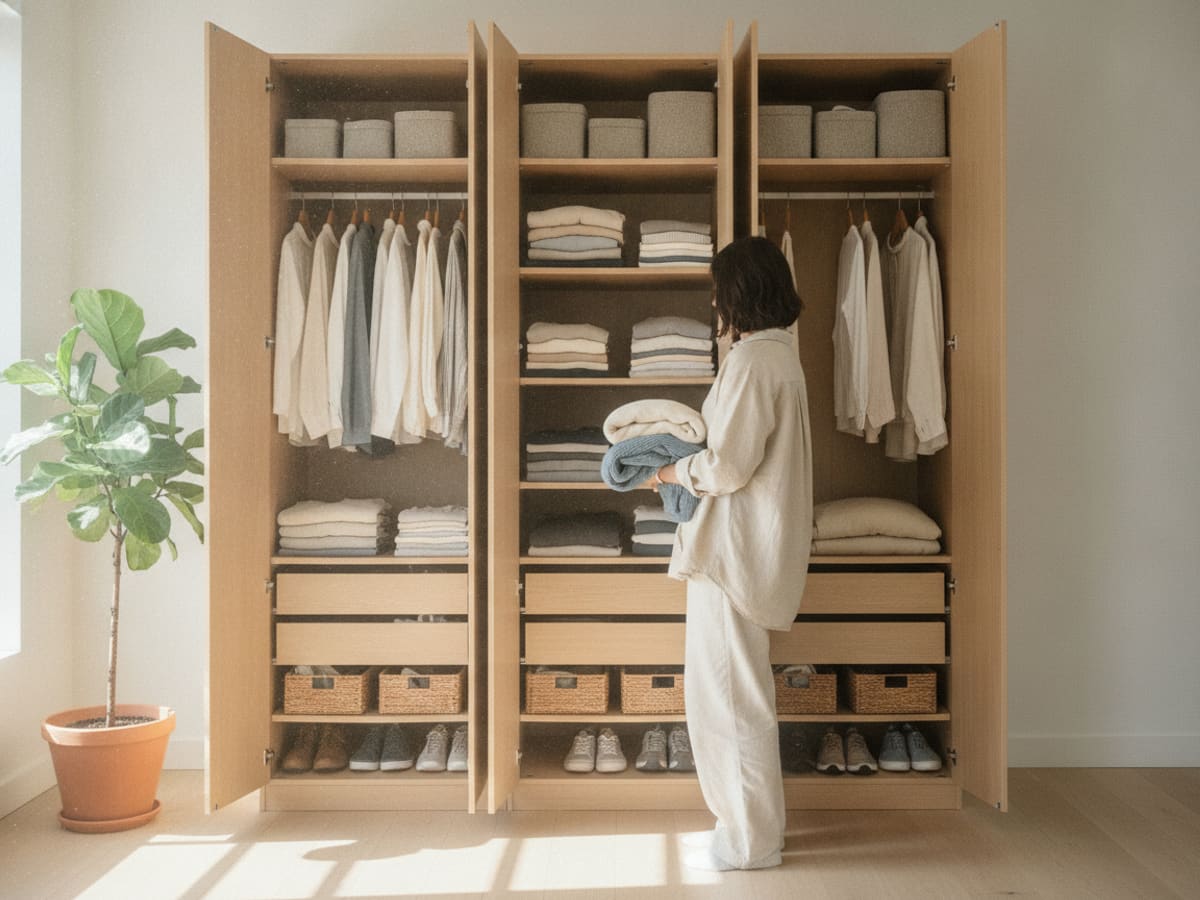
Most closets don't have a "too few clothes" problem. They have a "too few pieces I actually reach for" problem. Basics are meant to be the workhorses, yet they're often the items that sit untouched because something about them is slightly off. A quick audit before you add anything new can save you from buying the same mistake twice.
Here's a calm way to check, one step at a time.
Start with what you already wear most
Before you think about what's missing, look at what's already working. Pull out the five or six pieces you reach for without thinking. Lay them out and notice the patterns.
- What shapes do they share? Cropped or long, fitted or loose, high-rise or low.
- What colors keep showing up?
- How do they feel against your skin and when you move?
- What do they let you do, such as sit at a desk, chase a toddler, or walk to the train?
These favorites are your real criteria, and they're more reliable than any list of "wardrobe essentials." If your most-worn tops all have a relaxed neckline and soft drape, a stiff, structured option is probably going to stay on the hanger, no matter how classic it looks.
Fit checks you can do in a minute
You don't need a tailor's eye. A few quick movements tell you most of what you need to know, whether you're in a fitting room or trying something on at home.
- Raise your arms overhead. Does the hem ride up a lot, or does the seam pull across your shoulders?
- Sit down and lean forward. Check the waistband, the back of the top, and whether anything gaps or digs.
- Walk a few steps and take a deep breath. Fabric should move with you, not fight you.
- Look at the mirror from the side and back, not just the front.
- Ask yourself whether you'd be happy to wear it all day, not only for the first hour.
Comfort that depends on holding still is not comfort. If you find yourself tugging, tucking, or adjusting within a minute, that's useful information.
Reading the fiber content label
The label sewn inside a garment is a small instruction manual. It tells you what the piece is made of, listed by proportion, and that shapes how it feels, drapes, and wears over time.
Some general patterns to keep in mind:
- Natural fibers like cotton, linen, and wool tend to feel breathable, though each behaves differently. Linen wrinkles easily, and wool can feel scratchy to some people.
- Synthetic fibers like polyester and nylon are often durable and resist wrinkles, but they can feel warmer or less breathable depending on how they're made.
- Blends can combine strengths. A little stretch fiber, for example, can help a fitted piece keep its shape.
- Fabric weight and weave matter as much as fiber. A thin knit and a dense knit of the same fiber can feel nothing alike.
Rub the fabric between your fingers, hold it up to the light to see how sheer it is, and give it a gentle stretch to see whether it bounces back. Your hands will tell you things the label can't.
Care instructions and your real laundry habits
This is where good intentions often fall apart. A beautiful piece that needs hand washing and flat drying will only stay in rotation if that fits the way you actually live.
Check the care tag and ask honestly:
- Will I wash this the way it asks, or will I toss it in with everything else?
- Does it need ironing or steaming, and will I do that?
- Is dry cleaning required, and am I okay with the upkeep?
- Does it need to be washed after every wear, or can it be refreshed by airing out?
There's no wrong answer. Some people enjoy a careful laundry routine, and others want to wash and forget. The goal is to match the piece to your habits, not to the habits you wish you had.
Mixing with what you own
A basic earns its place by working with other things. Before you commit, try the "three outfits" test: can you picture at least three different outfits using this piece and items you already own?
If you can only imagine it with one specific top or one specific pair of shoes, it's more of a special-occasion item than a basic. That's fine, but it's good to know the difference.
Also consider your existing color palette. A new piece that's close to something you own, but not quite, can look like a mismatch rather than a match. Either choose something clearly complementary or something nearly identical.
Letting go of pieces that don't fit your life
An audit works both ways. As you look at what you wear most, you'll also see what you don't. Pieces that sit unworn often share a reason: they pinch, they need too much care, they don't suit your daily routine, or they simply aren't "you" anymore.
Try a gentle approach. Set aside anything you haven't worn in a full season, and note why. If the reason is fit, consider whether a small alteration would solve it. If the reason is something you can't change, like texture or style, it may be time to pass it along through donation or a clothing swap.
Letting go isn't a failure. It's a way of making room for the pieces that make getting dressed feel easier, which is what a good basic is for.